

222.3K
Downloads
490
Episodes
Dive deeper into the week’s biggest stories from the Middle East and around the world with The National’s multi-award-winning podcast, Beyond the Headlines — winner of two Signal Awards and the New York Festivals Radio and TV Awards. Nuances are often missed in day-to-day headlines. We go Beyond the Headlines by bringing together the voices of experts and those living the news to provide a clearer picture of the region’s shifting political and social landscape.
Episodes

Friday Nov 18, 2022
Friday Nov 18, 2022
For millions of Americans, it is an unwelcome blast from the past. For millions of others, it is a hope for a second chance to "drain the swamp" of American politics.
Whatever your view on Donald Trump and his mission to make America great again, there is no doubt that the former president's recent announcement that he intends to make another run for the White House in 2024 is deeply divisive.
True to form, Mr Trump heralded his possible campaign with a combination of rhetorical showmanship, bombast and mudslinging in the days leading up to the big announcement.
He took a swipe at the newly re-elected Republican governor of Florida, Ron DeSantis, a one-time ally whose success and popularity with his constituents has cast him as a potential challenger to Mr Trump.
Host Sulaiman Hakemy sits down with Hussain Ibish, The National’s US affairs columnist and senior resident scholar at the Arab Gulf States Institute in Washington, and The National's social media editor, Cody Combs, to talk about what is next for President Joe Biden, Mr Trump, Democrats and Republicans.

Wednesday Nov 09, 2022
Wednesday Nov 09, 2022
“Conflict, climate and the economic consequences of Covid-19 are feeding off each other in a vicious circle, with 54 conflicts, 100 million displaced people and 345 million people going to bed hungry every night.”
This was the stark picture painted by President and CEO of the International Rescue Committee, David Miliband in this week’s episode of Beyond the Headlines.
The National's editor in chief Mina Al-Oraibi spoke to Mr Miliband during his visit to Abu Dhabi to discuss concerns about the lack of adequate funding to support the most vulnerable in the world, in addition to the impact that the Ukraine war will have not only on Ukrainians but people around the world directly and indirectly.
Friday Nov 04, 2022
Friday Nov 04, 2022
There is a debate raging internationally about climate change. As we’re greeted by dire headlines and alarm, the UN had a stark warning - the battle against carbon emissions isn’t going well.
As the world gathers in Egypt for the Cop27 global climate forum, it can be hard to understand exactly where we stand, what’s being done and whether it's even still possible to stop climate change.
This week on Beyond the Headlines, host James Haines Young looks at where the world is on climate action and asking what to expect from Cop27.
Friday Oct 28, 2022
Friday Oct 28, 2022
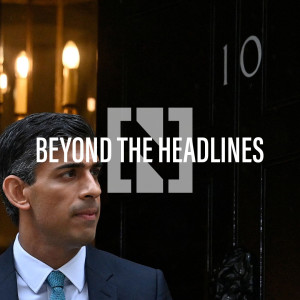
Britain has seen two monarchs and three prime ministers in the space of just two months. If a TV writers’ room pitched anything like the events of the last few months, they probably would have been told to dial back the drama and make the storyline more believable. So how did this all happen, and who is the man now in charge of the United Kingdom?
This week on Beyond the Headlines, host Gully Burrows asks: can Rishi Sunak restore the public’s trust in government and pull the Conservative Party together?
Tuesday Oct 18, 2022
Tuesday Oct 18, 2022
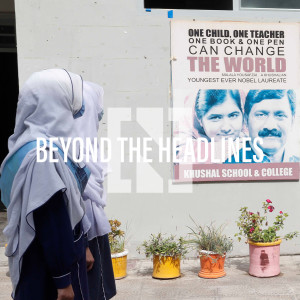
Ten years ago, one family’s future was changed forever when a single bullet fired by a militant extremist shattered a 15 year old girl’s face in a small village in Pakistan.
That was when the world learned who Malala Yousafzai is.
On this episode of Beyond the Headlines, host Nada AlTaher looks at how Malala’s story, advocacy and activism have inspired generations in her hometown of Swat in Pakistan and beyond.

Friday Oct 14, 2022
Friday Oct 14, 2022
Drawing a line on a map is never straightforward – there are many places around the world with no set boundaries. But now there is one less unmarked border as Lebanon and Israel have, after years of indirect talks, agreed on where the line lays.
This is a remarkable feat for two countries still technically at war. It might appear just an administrative achievement, an event to be noted as a quirk of geography and diplomacy. But this agreement could already have averted a war and have major consequences for the two countries - getting it wrong could cost someone millions.
This week on Beyond the Headlines, host James Haines Young looks at the significance of this week’s landmark agreement.

Wednesday Oct 05, 2022
Wednesday Oct 05, 2022
Microchips are integral to almost everything we do - they keep planes in the sky and cars on the roads, they are the brains of almost every modern device we use. It is microchips that mean we can walk around with smart watches more powerful than computers that took up whole rooms just a few decades ago.
But what would happen if we suddenly couldn't get hold of new chips? This is a question that has worried experts and legislators around the world for a while. And it is no longer a hypothetical thought experiment. It’s now a real issue.
This week on Beyond the Headlines, host James Haines Young delves into why the world could be running out of microchips – and what it means for us all.
Friday Sep 30, 2022
Friday Sep 30, 2022
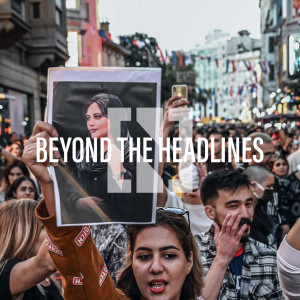
In a video shared many times on social media, an Iranian woman climbs on top of a car in the conservative city of Mashhad. She takes off her headscarf and starts chanting “death to the dictator”. Young protesters nearby join in before the crowd build a fire and women start burning their headscarves and slicing off their hair. Such a direct challenge to the powerful religious authorities that run Iran would usually be unthinkable. But sustained protests have been taking place across the country, sweeping through hundreds of towns and cities there, as well as abroad.
This week on Beyond the Headlines, host Mina Aldroubi looks at how the death of a young Kurdish-Iranian woman from Iran’s north became the rallying cry for years of frustrations and anger at the country’s leaders.

Friday Sep 23, 2022
Friday Sep 23, 2022
After a two-year disruption due to the Covid-19 pandemic, the United Nations General Assembly has returned to normal … more or less.
While the UN has implemented a number of covid restrictions including limiting the size of the delegations attending, enforcing a mask mandate inside the building and requiring proof of vaccination, world leaders are back in New York, shaking hands, holding high-stakes bilateral negotiations and bringing the city to a grinding halt. The meeting has come at a crucial time – the war in Ukraine, rising energy prices, spiralling inflation, increasing food prices, climate change and global health are all high on the agenda.
The National's Willy Lowry takes us Beyond the Headlines at the United Nations General Assembly to look at the key issues and hear what's on the agenda as world leaders all meet again in person for the first time since the pandemic.
Thursday Sep 15, 2022
Thursday Sep 15, 2022
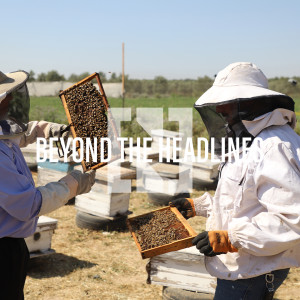
Gaza has only one honey-producing season, which begins with the onset of the warmer weather in March and lasts until the first week of May. This usually sets up Gaza'a honey production for the year, with 200 tonnes produced. But this year the weather stayed cold with unexpected downpours until the second week of April, and then became unusually hot.
The prolonged cold affected the blossoming of Gaza’s many citrus orchards and vegetable crops, leaving the bees with fewer flowers from which to collect nectar when the weather turned warmer and then too hot. These wild swings in the weather have cut honey production in the Gaza Strip by almost a third and are threatening the territory’s bee population.
On this episode of Beyond the Headlines, host Ahmed Maher looks at how the decline of the bee population is threatening food security and whether climate change is to blame.