
222.3K
Downloads
490
Episodes
Dive deeper into the week’s biggest stories from the Middle East and around the world with The National’s multi-award-winning podcast, Beyond the Headlines — winner of two Signal Awards and the New York Festivals Radio and TV Awards. Nuances are often missed in day-to-day headlines. We go Beyond the Headlines by bringing together the voices of experts and those living the news to provide a clearer picture of the region’s shifting political and social landscape.
Episodes
Thursday Sep 01, 2022
Thursday Sep 01, 2022
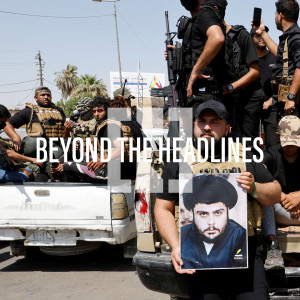
On Monday August 29th, Iraq came closer to civil war than it has for year. The fears of many Iraqis that political tensions would spill out into violence were coming true.
After 11 months of parliamentary elections, government formation is still help up by complete political gridlock. As violent clashes between the followers of Iraqi cleric Moqtada Al Sadr and members of militias affiliated with the Coordination Framework led by former Iraqi Prime Minister Nouri Al Maliki escalated, 30 Iraqis lost their life. However, by Tuesday afternoon, Al Sadr had called back his followers from the streets and restated his intention to “retire from politics”. Since then, Iraqi Prime Minister Mustafa Al Kadhimi has threatened to resign, which would add further chaos to Iraq’s political scene.
In this week’s episode of Beyond The Headlines, The National’s Editor in Chief Mina Al-Oraibi discusses these developments and what could come next, with guests Chairman of the Iraqi Advisory Council Farhad Alaadin and Senior Foreign Reporter Mina Al Droubi.
Friday Aug 26, 2022
Friday Aug 26, 2022
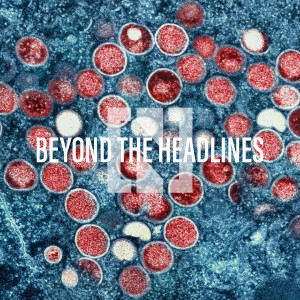
As much of the world’s focus remained firmly fixed on ending the coronavirus pandemic, another illness was quietly spreading in the background and has now emerged as a global health concern. A few months ago, monkeypox, an infectious viral disease, began cropping up in countries across Europe for the first time in years. The virus is spread from person to person through close contact. Historically, monkeypox has been largely confined to west and central Africa but had occasional and short-lived appearances elsewhere - such as in the US in 2003.
Despite this, monkeypox was never really an international cause for concern, until this year.
This week on Beyond the Headlines, host Juman Jarallah delves into the global monkeypox outbreak and what this could mean for a world still tackling a pandemic.
Thursday Aug 18, 2022
Thursday Aug 18, 2022
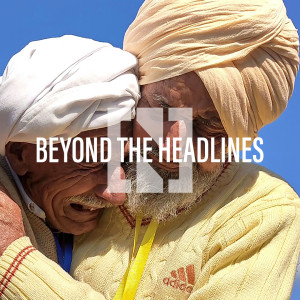
On August 15, 1947, British Viceroy Lord Louis Mountbatten formally announced India's independence from British colonial rule. The Indian subcontinent was partitioned into two countries – India and Pakistan.
The borders were drawn hastily along religious lines. Muslim-majority provinces became part of Pakistan, Hindu and Sikh majority areas remained in India. The borders cut through villages, rivers and homes, leading to one of the largest migrations in history. Unexpected and unprecedented violence followed, claiming more than a million lives. Fifteen million people left the land they had called home for generations - never to return.
In this episode of Beyond the Headlines, we hear the stories of those who lived through the trauma of seeing their land cleft asunder.
Thursday Aug 11, 2022
Thursday Aug 11, 2022
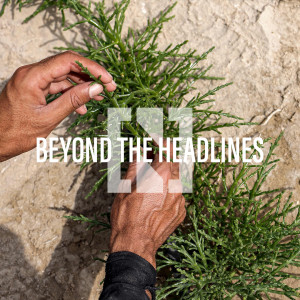
It’s amazing how the UAE’s home-grown produce has become so diversified. Over the years, farms have been modernised and new crops introduced. The supermarket aisles we browse in the UAE vividly illustrate the country’s progress.
The UAE aims to be the most food-secure nation by 2051, according to the National Food Security Strategy. But will this ambition be realised and can local farms keep up with the demand?
This week on Beyond the Headlines, host Nilanjana Gupta explores the future of farming in the UAE.

Thursday Aug 04, 2022
Thursday Aug 04, 2022
This summer is breaking temperature records like never before. The rising mercury is a reminder of the impact of climate change. Unless drastic action is taken, the temperatures seen in recent weeks will become increasingly common. Failing to find sustainable ways to heat and cool our offices and homes when temperatures soar – or plummet in winter – could lead to more Co2 being produced as more people turn to AC units or turn up their thermostats. But experts say there’s another way. Rethink our built environment.
Increasingly, architects are turning to passive cooling methods to keep the heat down in summer. Better insulation is offering more efficient heating in winter. But more is needed.
On this episode of Beyond the Headlines, first broadcast in 2019, we spoke to David Shipworth, Professor of Energy and the Built Environment at University College London. He told us about how we can rethink our urban environment to make extreme weather events more manageable without costing the Earth. We also spoke to Karim El Jisr, who established The Sustainable City Institute – a global platform for advancing knowledge in sustainability and the built environment.
Friday Jul 29, 2022
Friday Jul 29, 2022
For nearly three years, Lebanon has been steadily collapsing under the weight of a financial crisis that is one of the worst in the modern world. But what is life like for those who have to live through the situation on the ground?
To be Lebanese is to navigate a slew of daily challenges caused by the economic rupture. So people have developed coping mechanisms. And they’re not always healthy. Experts say mental health is declining, and substance use is on the rise.
This week on Beyond the Headlines, host Nada Homsi takes a look at Lebanon’s hidden psychological crisis.
Friday Jul 22, 2022
Friday Jul 22, 2022
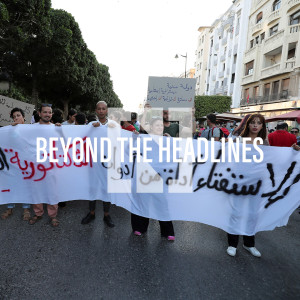
For more than a decade, Tunisia was seen as the poster child for democratic transition after the Arab Uprisings of 2011. By 2014 the country had had two free and fair elections and ratified a new constitution. But the consensus-building that went into drafting that new constitution soon dissolved, leaving behind partisan bickering and political deadlock.
Successive governments and parliaments failed to deliver on the socioeconomic demands that had driven the revolution: jobs were still scarce, prices were rising, and the basic services you expect from your government — everything from rubbish collection to transportation — weren’t working. The economy tanked; inflation rose; tens of thousands of young Tunisians hopped on rickety boats, trying to get to Italy. People’s dissatisfaction with their government grew. Protests raged on the streets in the winter of 2020 and spring of 2021. They wanted change.
Then, in July last year, President Kais Saied fired his government, shuttered parliament and essentially took full control of the country, saying it was the only way to stop the political deadlock. Now he’s asking Tunisians to vote in a referendum this Monday to ratify a new constitution — one it appears he’s written almost entirely himself.
This week on Beyond the Headlines, Erin Clare Brown investigates Tunisia’s constitutional referendum — and explains what it means not just for the country but for the wider region.
Friday Jul 15, 2022
Friday Jul 15, 2022
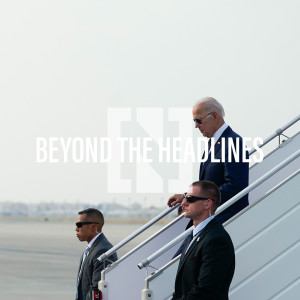
Joe Biden has made his first visit to the Middle East as US president. He might be no stranger to the region, having visited dozens of times as vice president and senator for Delaware, but this is the first time since he was elected to America’s top office. And it comes at a time of uncertainty.
Oil and food prices have surged since the Russian invasion of Ukraine and global inflationary pressures are pushing up prices across the board. Talks with Iran on reviving a nuclear accord to limit Tehran’s enrichment of uranium have stalled. A tentative ceasefire in Yemen is holding, but major challenges remain to end the more than five-year war. Energy and security might be top of his agenda but so is the fundamental question of America’s role in the Middle East.
This week on Beyond the Headlines, host James Haines-Young talks to The National's US correspondent Willy Lowry about President Biden’s visit to the Middle East, how it was received and how it will be remembered.
Friday Jul 08, 2022
Friday Jul 08, 2022
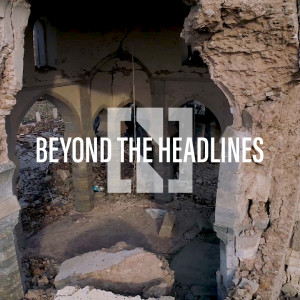
Five years have passed since Iraq liberated Mosul from ISIS in a bloody, street to street battle that left 11,000 civilians dead and much of the northern city in ruins.
Millions fled the brutal three year rule of the terror group and hundreds of thousands more fled the deverstating fighting to recapture the city.
But five years after victory, several neighbourhoods in Mosul still lie in ruins.
On this week's episode, host Robert Tollast asks why is it taking so long to rebuild Mosul.
Friday Jul 01, 2022
Friday Jul 01, 2022
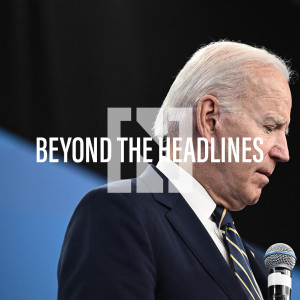
On June 29, world leaders gathered in Madrid to discuss the future direction of the The North Atlantic Treaty Organisation.
On this week’s Beyond the Headlines, host Mina Aldroubi speaks to Michael Stephens, a research fellow at the Royal United Services Institute, about the Nato summit’s biggest talking points.